Tuesday, November 24, 2020


Planning Commisison bias and the application process

April 11, 2017 by Fred Allebach

The role of overt bias among planning commissioners, and potential planning commissioners, has recently been called into question by a form letter campaign by hotel developers and their surrogates.

The reason, in my opinion, is to intimidate the Planning Commission and council so the hotel developers can stack the Planning Commission favorably to outcomes they want. This is done under the wrong assumptions that, one, only the developers and their surrogates are unbiased, and two, a selection of supposedly unbiased commissioners will merely make objective determinations based on an application of neutral General Plan, Development Code and consultant-generated “facts”.

I submit that the above assumptions are wrong. Commissioners have values, staff has values, the public has values, the General Plan has values, consultant reports have values, and the Development Code has values. Existing and past commissioners have displayed values. All these values constitute what the hotel developers are calling biases.

Case in point: Chair Cribb, and Commissioner Coleman, and Commissioner Edwards before, have said in Planning Commission opinions, many times, words to the effect of “let the free market take care of it.” This represents an ideological philosophy that is not in the General Plan or Development Code. Free market ideology opinions is what hotel developers want on the Planning Commission because it dovetails with hotel developer’s ideological economic benefits arguments.

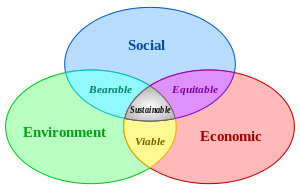
The real twist here is that free market ideology is then conflated by hotel developers et al to be objective, economic fact, as simply “economics” when in reality, there are multiple ways to parse economics. Growth and development can just as well be framed in a triple bottom line, sustainable, carrying capacity lens for example.

Therefore, given that there is a Machiavellian effort to shape the Planning Commission, and this struggle basically amounts to free market no limits versus sustainability and limits, I submit that commissioners Cribb and Coleman should recuse themselves from considering both hotel projects, and the Altimira Apts., because their free market, ideological biases telegraph what amounts to a predetermined vote. If hotel developers and their allies want to eliminate people who have sustainability values from the Planning Commission jury, then it is only fair that free market values also be recused and eliminated.

An exposé of such statements by the above-noted commissioners can be gleaned from past commission and joint study session video tape. Please be clear that my comments here have nothing to do with if anybody is a good guy, or how long they have lived in Sonoma, or what has been customary but is not an actual rule.

If the object of all the current maneuvering is to find commissioners who are neutral and have no stated values, and if the job is simply a robotic application of the rules, then there is no place for a priori free market opinions or ideological biases, and all who have displayed these opinions should be recused from any project that has built-in free market ideological economic arguments as part of its project narrative.

Alternately, the best the public could expect, in an ideal world, would be a balanced, transparent and honest discussion, between staff, commission, and public, on how and why luxury hotel, hospitality-tourism projects are spun and preferred to be interpreted one way or another, all using the General Plan and Development Code as primary sources.

In reality, there is no way to sidestep that people have values, opinions, and preferences. Why are we pretending this? Because of hotel developer obfuscation is why. What we are seeing with the Planning Commission, in my opinion, is hotel developers scared their interests might lose to a duly elected process, and pulling out all the stops to disrupt and throw the process in their favor.

The real charade here is that somehow it is possible to have a process to appoint neutral and objective people who have no values or prior opinions. And that these automatons will then interpret the General Plan and Development Code in an impartial way. Never mind that these core city planning blueprints are not simply “facts” but the reflections of principles and plans that are themselves shot through with values to start.

So, until such time as the city is able to find any actual neutral and objective people with no values or existing opinions to serve on the Planning Commission, I request that Chair Cribb and Commissioner Coleman recuse themselves from considering both hotel items and the Altimira Apts. item.

The only real reason the city has arrived at this place is the failure of the council, over the years, to address the tensions between residents and tourism in a straightforward way. In the larger picture, the loss of “the vital center” has caught up with Sonoma. The city has gradually become polarized around hospitality tourism. It is plain to see councils in the past have come out on the free market side of this argument, and now when there are actually some council members who want to address this resident/ tourism tension, what we get is obfuscation, pushback, and a Planning Commission power struggle, and the furtherance of not dealing with the core issues facing the town.


Who says the system is broken ?

April 19, 2017 by Fred Allebach

It seems clear where “the system is broken” rationales, about city commission appointments, are coming from. This is a campaign by the FSE developer, Caymus Capital, and its surrogate, Bill Aron, to intimidate the Planning Commission, intimidate the mayor, intimidate the city, and to produce an AstroTurf, hearsay e-mail campaign which it appears a council majority has bought into. (see the scurrilous e-mails below) This is all hearsay, because no one can know what e-mails said what? From who? But all evidence points to the said e-mails, that have guided some councilmemeber opinion, as being generated by the Bill Aron/ FSE AstroTurf campaign. This is a low-brow smear campaign against the mayor, to impugn her character, and her good will, and care for Sonoma’s future. It is really astounding some council members have so easily bought into this smear, and displayed such a paucity of critical thinking.

FSE manipulation

It is pretty clear that council small-minded, petty personal grudges are being exploited and manipulated by the FSE cohort. The public expects better from our elected leaders, at least an honest airing of the actual issues, and some display of independence and thoughtful analysis. What we have instead, is an attack on procedure, a procedure that has worked fine for 25 years. The procedural criticisms are cover, and camouflage, for the underlying interests of Caymus Capital, the power behind the FSE hotel proposal.

McTaggart bullies the Mayor and no one steps up

This was coupled with a shocking lack of decorum at the 4/17 council meeting displayed by a clearly agitated former Mayor Ken McTaggart who served in the 1980s. NO members of the council, NOR CITY STAFF, stepped up to defend the mayor from McTaggart’s intermittent, out-of-order bullying; this was most disturbing. FSE then had the nerve to produce two people, one a consultant from Windsor, to lobby the council BEFORE their project has barely begun its consideration by the Planning Commission, and to talk about sustainability and workforce housing, of all things. This shows the FSE people are not even concerned about the Planning Commission; their end game is to obfuscate the issues, and get three council votes, which it appears they now have. This is all very transparent, walking like a duck.

Sustainability obfuscation is here in spades

Look for FSE to fund a reactionary big money candidate for council coming up. This will not do much for any actual sustainability initiatives, other than to obscure and obfuscate what sustainability is, just like the Darius Anderson, anti-Measure B campaign did. We in Sonoma are headed for the exact same kind of pitched-battle future now unfolding in Napa, between the NapaVision 2050 sustainability coalition, and the wine hospitality industry. Somebody with some sense better step up and start advocating reason here, before we melt down to total war, if we are not already there. At least the Anderson group now is showing itself to be tactically smart, and not intemperate and half-cocked like the Caymus group.

Who are the “elite”?

In the Aron letters below it is amusing to see him accuse others of being the “elite”, when it is the Caymus Capital 1% financialized elite who are behind this whole imbroglio. Caymus Capital is revealing itself as an entity willing to say and do anything to get their “exceptional (investment) returns”. The Caymus website associated with Ed Routhier is recently password protected, so the public cannot view their Wall Street strategy. Who would ever say Wall Street is sustainable!?^%^%$#%$^ It will be revealing to watch how they spin their project as “sustainable” for Main Street. Stay tuned and watch the fog machine work.

Council goal to balance residents and tourism: grade F

The city council goals of “balancing city character”, and finding a nexus with residents and tourism, are now shown to be a complete failure, and the city is about to be plunged into the same conflict as if Measure B never even ended. What happened for all those years when we could have been getting on the same page?

Inability to make a convincing argument

I am afraid we are entering a period of some very nasty politics, where taking a larger view of the town’s good, and independent thinking, has been subsumed by small-minded, petty personal grudges, and hard-ball, manipulative spin campaigns by big $. This will not stand without being called out for what it is. I was very disappointed with the 3 to 2 vote against Lynda Corrado last night. No one was able to convincingly articulate why the system is broken, other than show congruence with Bill Aron’s and Caymus Capital’s spin campaign. There was no good reason to not approve Lynda Corrado, except for spite. No one said she was unqualified.

Power struggle between big $ and triple bottom line

I suggest some council members take a larger view here, and display a little more independent analysis of the situation. How long are we going to wait for any commission appointments now? How will it go when the push back comes to your commission candidates who buy into FSE’s “smart growth” propaganda?  Every applicant will act like a Supreme Court nominee, and be very careful to not say anything at all. If they say too much, council grudges and FSE pressure will lie in wait to cut them down. And who is supposed to believe that a candidate acceptable to FSE will be seen as objective by anybody?

This will unfold in some nice private quiet public hearing? Bill Aron is going to go lie down? If, as he said, David Cook’s mayoral year was ruined by this same dynamic of challenging the commission appointment process, why do that to someone else in such a destructive and inelegant way now? In the absence of any convincing council argument as to why anything is broken, a perceptive public can read between the lines to the grudges exploited by FSE and their surrogates.

Time to reassess, or dig the hole deeper

To say the commission appointment process system is broken, but to not be able to convincingly explain why other than appear congruent with Caymus Capital spin, which has made a naked character attack on the mayor, and then be offended by any questioning of motives as a character attack, and then let the mayor be bullied in public, her character impugned, this is about all going to go over like a lead balloon, and serve to destroy any comity necessary to work together. Time to step back, reassess, get the real cards on the table, get honest, and not appear as puppets for vested interests.

The only sane course at this point is for council members to explicitly disassociate from Caymus, and show the independence and integrity to be critical of their low-ball tactics. Then you can be your own person and talk about how to agree on any new appointment process.

There is no shame nor hidden agenda to talk about sustainability, and to focus on Sonoma’s desired future. That’s what this is all about. And if you want to know what is actually sustainable, look for evidence a triple bottom line method. If you hear the word sustainable, but in the end, find only money and an economic bottom line, chances are you are being taken for a ride.

Below are Bill Aron’s proxy letters for Caymus Capital.

My fellow Sonoman:

I’m writing today because I strongly believe participatory democracy means you get to have your say; you just don’t necessarily get your way. That is the reason we have a City Council.  We look to them as our elected representatives to be good stewards of our government and to act in the best interests of our town and its citizens.

I’m gravely concerned our Mayor, the Honorable Rachel Hundley, is attempting to hijack the Planning Commission and the democratic process by stuffing the Commission with zero growth candidates. The mayor’s last three appointments to the Planning Commission all have spoken out publicly against multiple development projects.

She cleverly ousted Commissioner Ron Wellander by not reappointing him to a second term even though he served admirably and capably. The Mayor then proceeded to appoint James Bohar who is on record of speaking against the First Street East Project, among others.

See my video here.

She cleverly placed his nomination on the “Consent Calendar” of the City Council. Council member David Cook said at the last City Council meeting he had asked the City Manager who the Mayor had appointed to the Planning Commission. The City Manager would not tell Council Member Cook who that was.

Our Mayor has violated the spirit of the Municipal Code that requires she secure the ratification of the City Council for each appointment to the Planning Commission. This disrespectful, irresponsible behavior has the potential to irreparably damage our town.

I do not expect everyone to share my vision for Sonoma embracing smart growth. Just don’t violate the spirit of the Municipal Code by not reappointing a Planning Commissioner without the ratification of the City Council. Don’t appoint Planning Commissioners that have taken activist positions against projects that are coming before the Commission like James Bohar and Lynda Corrado.

Please send a note to the members of the City Council on this vital issue. Go here to make your voice heard.

Sincerely,

Joseph M. Aaron


Dear City Council:

I have now heard back from a few of you, thank you for your responses. I want to be sure you all received the email I sent last Thursday and have had the chance to review it.

As I’ve become more involved in the fight for a fair and balanced planning commission, I see a trend unfolding that would radically change our special little town’s General Plan.

The story begins with Ron Willers. Mr. Willers has said unequivocally, the First Street East Project should be re-zoned.  He has publically stated this area should be affordable housing only, not mixed use.

Next comes Mayor Rachel Hundley’s close friend Kelso Barnett. Mr. Barnett lives on First Street East, a block from the FSE Project. Mr. Barnett has publically spoken against the FSE Project. Yet the Mayor reappointed Barnett to the Design Review commission against protest from members of the community.

The trend continues to unfold as Mayor Hundley nominates James Bohar and Lynda Corrado to the Planning Commission who have both spoken publically against the FSE Project.

What do Willers, Barnett and Corrado have in common?

1. They all live in the FSE neighborhood.

2. They all want to rezone the land in the area north of the Mission.

3. They have all have spoken out publicly against the FSE Project.

The Mayor has cleverly circumvented the process to create a Planning Commission which benefits an elite few. With this simple wave of the Mayor’s magic wand, she eliminates for the City a revenue generating Mixed Use project with housing opportunities. It begs the question, is our Mayor working for the greater good of Sonoma, providing housing and smart tourism like she promised when she was on the campaign trail?

I urge the City Council to put a formal process in place to make an applicant’s qualifications, and impartiality a meaningful factor for their approval.

Sincerely, Joseph M. Aaron


Hello Jim,

My name is Joe Aaron. I live on Third Street East.

I wanted to see if you would take my call and have a conversation with me about the Planning Commission.

I know you have spoken out against the FSE Project. But that was as a private citizen. The Planning Commission requires you to take a different view.

I feel you have had a baptism of fire. The result is you have inadvertently found yourself in a difficult position.

Planning Commission members never gets 15 minutes of fame. They never get to be Mayor. The Developers dislike you and think you are unreasonable. And after they speak the NIMBYs get up and say you are unreasonable and that they dislike you. My skin is too thin to sit in your chair.

Please respond with a good time to call if you would.

Joe Aaron

It is 3 PM on Thursday evening. You did not call.

I am deeply troubled by the fact you were not more forthcoming when you met with Mayor Rachel Hundley and City Council member Amy Harrington to discuss your appointment to the Planning Commission.

The Sonoma Index Tribune published an article on March 23rd concerning the Planning Committee and the resignation of Commissioner Chip Roberson. The article alluded to Mayor Hundley’s failure to reappoint Commissioner Rob Wellander for a second term. It also covered the standard questions Mayor Hundley asked Commissioner Ron Wellander as part of their interview process, and by extension, the questions asked of you. I quote the Mayor, “We asked if people had taken a public stance on things…we were trying to find people who WEREN’T going on the record about projects that were coming up before the Planning Committee.” I also would like to reference the April 3 Sonoma Index Tribune where Mayor Hundley said she was not informed of your public statements against multiple development projects, despite having queried you on the subject during the Commission-nomination process.

I have provided everyone on the planning commission with a video of you addressing the Planning Committee in March of 2016. In that appearance you publicly opposed the First Street East project.

The very large elephant in the room Mr. Bohar is the inescapable conclusion that either you did not answer Mayor Hundley’s question truthfully; or Mayor Hundley isn’t being truthful with the public she serves. There is a third option of course, which is that the two of you colluded to deceive the Public. To what end I do not know but the good people of Sonoma deserve to know.

None of the citizens whom you serve were in that meeting room. If the Mayor did not ask you the same question she asked Ron Wellander, this is your opportunity sir, to clear your name. If the Mayor did not ask you if you had a taken a public stance against any projects currently before the Planning Commission the good people of Sonoma deserve to know.

If not Sir, you should resign from the Planning Commission effective immediately and open the seat up for a public servant who can serve this town with honesty and integrity.

Sincerely, Joseph M. Aaron


Talk of the Town continued

April 23, 2017 by Fred Allebach

The following are my musings and opinons as a city council watcher. Any semblence of accuracy is purely coincidental.

Regarding the Planning Commission application process stand-off, there are two council members with a claim of hijacked process, and two others with a claim of broken process, and then Gary Edwards agreeing with the broken process camp based on an applicant’s improper disclosure.

Differences in level of experience are also factors, with the broken process camp saying the city needs experience, and the hijacked process camp saying the same thing, just a different kind of experience.

The above is just a superficial breakdown of the issues. Would that this could be just about actual issues themselves. Unfortunately, the messy way that the broken process camp has gone about presenting their case, and the nastiness of their allies, has made any rational discussion of the commission appointment process into a nasty fight that the whole town is wondering how we got here?

Mayor Hundley was using her currently legitimate prerogative to select who she sees fit for the Planning Commission. This choice extends to the re-nomination process. Cook, Edwards and Agrimonti took exception to this, and appeared to use a Caymus Capital surrogate’s arguments as the basis for their rationales, although they deny it.

As Karin Skooglund has pointed out in Sun comments, “The action of three City Council members to vote down the nomination of Lynda Corrado to the Planning Commission because they don’t like the process defies logic. Council member Agrimonti said: ‘Lynda is not broken; our system is broken.’ David Cook said much the same, ‘this process doesn’t work; it has nothing to do with Lynda.’ Said Edwards, ‘I won’t be supporting Lynda, who I consider a friend.’  If you have a good candidate who is liked and respected and qualified but you vote her down because of the “process,” you are being disingenuous. The hallmark of the FSE proponents has always been disingenuousness, and now it seems, it has worked its way into the thinking of some of our City Council members.”

At the 4/17 council meeting, councilmember Cook said to “remember Ron Wellander”, and that he (Cook) always reappointed commissioners, “and that’s what made the process work.”  Here again a disagreement between the hijacked and broken process camps. Is a reappointment a kind of entitlement, so once appointed, eight years is guaranteed? Or does the review threshold mean people can be replaced? History shows some commissioners have not been re-appointed, but the system remained in place.

An actual issue here would be: what criteria does the council use to select commission candidates? How will this criteria account for people having values and opinions, even the council selectors? How does any objective criteria get out of that house of mirrors?

Edwards chimed in, “we haven’t blindly reappointed anyone.” So, if we don’t have to blindly reappoint, we won’t, right? Hundley gave a solid set of reasons and measures for her choices.

Agrimonti made an alternative facts comment, that was part of a larger statement, not clear in scope, but certainly we are in a process where the process is seen in different ways by different people. This does get us into the realm of alternative facts. We have also gotten into the realm of fake news, with the Joe Aron-inspired e-mail storm, and the Joe Aron poll that claimed 68% of Sonoma supports the FSE project.

After all, the clear subtext here is that this whole imbroglio is brought by Caymus Capital (FSE) as part of a PR campaign to intimidate and influence the city, and city council, and get three votes to approve their project.

Cook said “I’m not the attacker, I’m just the one receiving the emails; I’m just trying to put Sonoma back.”

Speaking of these e-mails, let’s see them. How many are from FSE investors?

Is Aron an investor? Is Aron on the Caymus Capitol payroll? He was seen consulting with Ed Routhier during the first hearing on this Lynda Corrado appointment matter and then Routhier seemed to shoo him away. How many of the e-mail senders are locals? Let’s see if we can figure all of who is biased here and in what ways. The FSE e-mail storm seems to focus on alleged bias, yet this is brought by people totally biased themselves. What gives?  What gives is that this is all about winning, and bias is just a prop in the battle.

Another substantive issue is who gets to see the Planning Commission applicant pool during the selection process.

If the full council wants to see all the commission applicants, does that make the applicant pool into public information? Can the public see the applicant pool too? If not, why not? Then everyone can chime in on what’s fair, not fair, biased, or who is the best, the worst, who is pro-growth, slow growth, no growth, and whose interests stand to win or lose, and we can get this process totally choked up with too many Chiefs and not enough Indians.

At the Sonoma Earth Day event, a young woman said she felt the Community Services and Environmental Commission would be perfect for her interests and skills to offer the city, but no way would she apply and subject herself to a process like that which happened to Lynda Corrado.

If Corrado was cut, for being representative of an actual sustainability candidate, all who are pro-growth must be gotten rid of too. Who will actually qualify now that we have a stand-off of values and anyone seen as compromised in any way is sucked down the Maelstrom of a Machiavellian power play over control of the town’s future?

The only trouble for Caymus and FSE: they will likely make many more enemies here with their bullying tactics. Their project can’t help but fail and be soundly rejected by a Sonoma offended by such low-ball maneuvering. If Cook and Edwards are not best friends, they can come together over shared values, the ultimate shared values for all of us: decent behavior that doesn’t disparage and vilify others. I predict the FSE hardball will backfire. No amount of slick consultant PR will be able to dial back the bad impression the attack dogs have already unleashed.

We obviously have a battle of limits vs. no limits. Same as Measure B. This is what the broken process and hijacked process is really about. We knew Cook and Edwards were free market guys, so it’s not surprising that when push comes to shove, they are in the same camp. Agrimonti? She went with the no limits, broken process group here. It’s hard to tell what her actual heart issue is? She does appear taken aback by the acrimony and low level of discourse. Madolyn echoes Rodney King, “why can’t we all just get along?”

How will the public know when the process is cured here, and we can all live happily ever after? Or will this be the start of a bitter divide? Has ice been planted, and later we harvest wind?

The issue of bias has a bit of history. During Measure B, the city attorney established what I have noted in my short career as a council watcher, as the David Cook Rule. Cook was president of the Chamber; the Chamber was lock-step, all-in against Measure B (limits vs. no limits); the council had to make a vote, and all Cook had to do was say he wasn’t biased, that he didn’t have a financial interest, and then he could vote. All this in spite of an obviously biased background at the Chamber. Note to Jim Bohar and anyone who ever have made any prior statements: it doesn’t matter, just invoke the David Cook Rule and say you are not biased. It’s that simple.

So, what we have in the end here, is a reliance on the validity of the e-mails, as primary evidence in the process is broken camp’s rationales. These same e-mails are what the process is hijacked camp says are nasty AstroTurf by Caymus Capital. Cook denies it. Valid, invalid; broken, hijacked? The only way we can know is to see all the e-mails, see which are form letters, see who are investors, who are locals, and then make a determination of the biases therein.

A public disclosure of the e-mails would balance out the rumored Joe Aron freedom of information request for all the relevant e-mails of Jim Bohar, Bill Willers, Kelso Barnett, Amy Harrington and Rachel Hundley. Is this guy Aron making friends or what!?

In terms of the e-mails, does a council member’s vote for each discreet issue have to stand on some informal, unquantified, unknown type of council member community polling, where the production of mass e-mail blasts counts as public opinion? Well, this can be countered, and then we are back in a competing petitions type of stand-off. If numbers count, how could council members now, who cite the e-mails, have ignored the 1000 signature no dogs on Montini petition?  150 private e-mails, 1000 public signatories.

At the end of the day, council members are elected to use their judgment and analysis, and it is plain as day that council members will vote their ideology and preferences over any level of e-mail blast or petition; that much has been shown to be true. This is reasonable; they’re elected to be who they are. Forget the e-mail justifications, and the unverifiable Sunflower polls, just be who you are, as elected, and lay your case on the table. Be like Steve Barbose in style.

Cook railed that he’s not a hypocrite; he’s just had it with a problem that has “plagued Sonoma for a long time”; he said, “I’m over the dysfunction.” That is all very non-specific and does not really lay it out to the public what exactly is broken and why, other than that Wellander was not reappointed, which was totally street legal. What the public sees is him giving back what he got. Whatever it is, it seems we are in for even more dysfunction.

This is like a relationship fight. At some point the actors will have to come clean and admit the parts where they were wrong, or else there can be no moving on.

Cook is a nice, personable guy. He hates the spotlight being shined on him with this kind of press. I have always liked David.  In my opinion he needs to go back to his original campaign slogan, “common sense” and bring to bear his last campaign claim that he is a negotiator. Now is the time for a breakthrough. If Cook is a man of good will, he can assume that the other council members are as well. How are we going to use any common sense to negotiate our way out of an impasse of a hijacked or broken process? Who can be big enough to reframe this, so all can buy in to a larger level of analysis?

It seems the proxy issue is that Wellander did not get renominated. Then Roberson resigned, throwing more logs on the fire. The end result is a spiteful rejection of Corrado, and an uncalled-for disparaging of Bohar, and an unknown way forward through the broken/ hijacked impasse. The real issue is control over the beliefs and likely votes of future Planning Commissioners, and whether it is even possible to simply interpret the Development Code and General Plan like a robot with no value judgements. How will a council that clearly has ideological values themselves develop a selection criteria that avoids all ideology and puts forward candidates acceptable to all? Are there any actors in town who would apply that can show themselves to be the mythical “undecided voter?” Is this not exactly like current Supreme Court politics? The facade of a neutral candidate who is totally soaked in ideology. Why play the charade when everyone can see through it?

Maybe City Manager Capriola can finesse all this? She must be listening to BTO, Taking Care of Business, and working overtime.

The overall truth here is, there is a conflict on who has hijacked or broken the process and why. Who is at fault? What are the real, and proxy issues?  I have my council watcher take, but it’s likely I have my own blind spots. One thing is certain, smearing the Mayor and others with ad hominem attacks, for doing what they think is best for the city, is not staying on the issues, or keeping a straight-up process. This is not a pretty picture. How can this all be retrieved and set back on a decent track?

If this situation is part-ways based on grudges over past votes, now that Edwards has abandoned any “new council majority”, and has hung Hundley, his mayoral nominee, out to dry, it looks like Edwards will be a sitting duck for all council member to vote against on anything he wants in future votes. He’s Benedict Arnolded them all.

In this sense, Cook is not more a hypocrite than Hundley is calculating and undemocratic, or that Edwards is Benedict Arnold, or any of the other petty accusations, or musings by the public in all of this. This is all hyperbole. Any group of people will end up on different points over time, and differences have to be dealt with. Some will be a swing vote one time but not another. That’s all part of calling it how you see it. All everyone is doing is trying to represent their values, but somehow this has all gone south and devolved into a scrum mixed up in personal antagonisms and big money maneuvering. We could use some adults here to rescue the process from name-calling and petty motivations, and have a respectable process re-focused on the actual issues, that citizens can be proud of.

The most admirable of people are ones who admit they have been wrong and then step up to solve the problem. I submit that one wrong step has been to buy into Caymus Capital arguments about FSE project approval, even before it has gone to the Planning Commission. Council members should assert their independence of vested interests, if what this is all about in the end is the appearance of unbiased judgement.


Altimira Apts.: A condensation point for local issues

April 26, 2017 by Fred Allebach

The Altamira Apartments affordable housing development on Broadway brings to the fore many salient regional planning and climate, sustainability and transportation priorities. Two of these are: compact, high density infill to offset county land use environmental protections, and low-income housing to provide workers in Sonoma a place to live.

AMI is a critical threshold

Hospitality and service workers make what is called Area Median Income, or AMI. This is an average of $60,000 a year. Low income is defined on a gradient below the median, such as 80%, 60%, 40% of AMI. Given that the average rent in Sonoma is $1,800, and the median home price is $600,000, it is clear that anybody who works in hospitality and service, our prime economic driver, cannot afford to live here. That’s a problem, for the planning reasons given in the first paragraph.

The above paragraph illustrates why a disproportionate amount of market rate housing in Sonoma works against regional planning and sustainability goals.

High density is called for

With high density affordable housing, workers are included in the community, and help Sonoma to maintain a diverse demographic, and workers don’t have to commute from Vallejo and generate more transportation greenhouse gas (GHG) impacts. This all adds up to choosing climate and social justice as community values worthy of support. This is why the project is eligible for a density bonus.

What are the advantages here? Lower Vehicle Miles Traveled, (VMT), lower transportation GHG, emphasis on local economy, inclusion of low-income hospitality workers in the Sonoma community.

Initial project objections untenable

Project objections initially began with complaints about potential higher crime and lower property values. These were racially coded type of arguments in favor of white suburban redlining against minorities. Given a little pushback on this, the neighbors dropped these arguments as socially untenable.

Demographics and segregation

In reality, Sonoma proper, is a quaint, rich white people’s haven and get-away, with a demographic shifting to more wealthy residents, and also transient second home owners and vacation rental uses. Demographically, Sonoma is, and has been, segregated. Sonoma lacks demographic diversity because of conscious manipulation of zoning that then effects real estate values. This is a pattern in common with much of suburban white America.

This same pattern, and inflation pressure, and subtle manipulation of demographics is now coming to the Springs, which has been “the other side of the tracks”, a place housing a population of workers. Although certainly that is not all the Springs is or was. Current census figures show a shocking divergence of wealth between the Springs and Sonoma.

Externalizing problems

The upshot? There is systemic economic/ real estate pressure to externalize all valley workers to locations like Fairfield. Any socio-economic issues that accompany such people are also externalized, and the city and county thereby avoid taking responsibility for their own demographic milieu.

Current objections = 8 units

For Altimira Apts, rather than crime and real estate values, objections now center on parking, traffic, density, design, and small town character as proxy, or new primary reasons for not wanting the project. The neighbor’s basic strategy is to get rid of the density bonus and have eight less units. That’s what all the objection centers on now, eight units. If any horse trading is to be done, it will be over how many of the eight units to possibly eliminate? Each unit eliminated, however, will have a proportional effect on raising the rents of the remaining units.

Already dense

The area on Broadway where these apartments will be located already has quite a bit of high density development nearby. Google Earth photos of this and surrounding areas show the houses to be packed in quite tightly. The immediate homes adjacent to the project barely have space between them. And look at Moon Valley and Pueblo Serena nearby: dense! The Altamira area is hardly pastoral: Broadway Market, Four Corners Service Station, Salsa Trading, Friedman’s, Train Town, the Lodge hotel, Pizzeria Capri, Sonoma Valley Bike Tours and Rentals, Broadway Villa Post-Acute healthcare, and the high school and middle school.

The addition of an apartment complex pretty much continues the residential uses already in place. Having the density bonus, which amounts to eight more units, is hardly a drastic difference, especially when balanced by all the upsides for less transportation GHG and necessary housing/ demographic equity.

Inclusive is right for the right reasons

As this Altimira housing project makes its way through the process, expect environmental, climate, labor, and affordable housing advocates to support the project as is, with density bonus. Failure to open up Sonoma to additional housing will amount to continuing to make Sonoma exclusive and increasingly elite, an unaffordable place to live and work. The project is right because it is inclusive, not exclusive; it’s a small step in the right direction. We need many more steps just like it.

Precedents exist

Sonoma has precedents for high density infill, both market rate and affordable: Nicora Place, Boccoli Street, Valley Oak Homes and more. The Springs Specific Plan has had the public weigh in with substantial support for high density infill. Numerous properties around town and in the valley, are being eyed for affordable housing. Note that affordable housing can be used as a weasel word phrase, and unless the price is explicitly tied to the AMI, then the price will likely be “affordable” by market rate standards. Market rate affordable is thought by some to be $600,000.

High density = more traffic and parking problems

Parking. If higher density is allowed, where will everyone park? What about the traffic? Well, why would over-parking and traffic not be planning issues for the Plaza? If Level of Service metrics for intersections can be waived, in favor of stoking the economy with tourism, but also keeping small town character by not having a parking garage right next to someone’s historic Sonoma dream house, what gives? If the core of town does not need to account for more and more parking and traffic, with stoplights, signaled crosswalks, all to preserve the sense of the pastoral, pedestrian-oriented Plaza, why wouldn’t the same type of waivers apply in principle to dense affordable housing? Planners can’t have it both ways here.

At the end of the day, higher density infill of all types will turn Sonoma into a clusterfcuk of gridlocked traffic without enough parking. This seems to be the price the whole Bay Area has to pay for being so nice geographically, and maybe for being a last refuge those of liberal persuasion. And if we are mostly liberals, why wouldn’t we want social and climate justice? Maybe better get a bike, make some more bike lanes and encourage some stores locally where working class people could afford to buy anything when they bike there.

Character as the ultimate weasel word

City, small town, rural, and historic character are all invoked as reason to not make any big changes. Yet, this very character is what ends up costing so much and what externalizes all the workers, and what creates GHG transportation issues. This pits character vs. equity and climate justice, as Sonoma and Sonoma Valley’s central issue. This pits necessary pragmatic planning changes against clinging to a Leave It to Beaver, small town past. Character in some ways stands for white wealthy privelege. Perhaps the real character is not frozen in the past, but is the flavor we all make now, as we debate all these issues and co-create Sonoma’s desired future.

Change: good or bad for who?

This opens up an additional piece of this puzzle: change. How can Sonoma maintain the sense of what it was, while at the same time advertising itself as such a great place to come and live, and deal with the nexus that such greatness creates for AMI affordable housing? The same character (goose that laid the golden egg) that made Sonoma great is now being killed by the changes wrought by its very attractiveness. Currently, the problems of change, rather than be taken on fully, are tacitly externalized.

Since building a moat around town is not a viable, or legal option; and since commercial forces are not going to stop hyping Sonoma, and since it is not viable for Sonoma to externalize all its climate and social equity impacts and problems to other municipalities, change is going to have to be dealt with right here and now, by us, the actors on stage.

One change we need is low-income affordable housing, with goods, food and services affordable at AMI levels as well. If planners, electeds, and the private sector can steer outcomes to higher values, they can also steer society to more equitable values as well.


Lessons of Bonita Washington

May 2, 2017 by Fred Allebach

Many folks self-reference as a preface to their comments: “I did such and such of so many years and…”; “I was on _____ for so many years and …”; “I’ve lived in Sonoma for 35 years and …”; and so on and so forth. Some local players are well known for self-referencing as a substitute for grappling with actual issues. Some confuse self-referencing for criteria and having an argument.

Self-referencing statements are not logical arguments. They do not deal with any of the issues or criteria at stake. They are an attempt to establish a sense of qualifications, which then conflates those purported qualifications with a sound judgement. This style conveniently sidesteps having to deal with the substance of any issues. By changing the context, and making it personal, then the issue becomes a personal/ emotional thing rather than one of shared metrics with other people.

This goes to show that the material, of the issues, is of a socially-constructed nature, and is not like getting plate tectonics, or the creation of planetary atmospheres. There is no one answer or preponderance of consensus. In the socially constructed universe, every law is of our own making. And, as Eric Hoffer said, the truth of a doctrine comes not from its meaning but from its certitude.

Avoid personal pronouns

In expository writing, no personal pronouns should be used. For example, inserting we, you, I, or us, into a text that seeks to explain an issue, makes it more of a personal statement. Analysis of an issue, for strength of argument, should not include referring to how you feel about it, or how others might feel about it. Those references are not primary, verifiable sources. A case can be made on the merits of the issue without throwing in personal pronouns. One strategy for staying issues-based: make a coherent argument, not an I-statement, or at least to attempt to bring up some criteria.

Everybody’s got one

Sure, both I-statements and coherent arguments are opinions. The coherent argument is stronger because it puts more metrics on the table, tries to have strong sources, and starts to approximate the scientific method, where if a thesis is not potentially falsifiable, then it can never be a fact, only an opinion. Anyone can learn this style of thesis presentation right at SRJC.

In local issues, where preferences come down to subjective, socially constructed value judgements, and where there are no immutable “laws”, what happens is endless argument about “the facts.” Yet there are no commonly accepted local facts to begin with. The best that can be done is to try to stay on the issues, and to at least make an attempt to pull the explicit personal elements out of the discourse.

An example

Let’s take on the logic of a few hypothetical self-referencing statements and see how they hold up. “I’ve lived in Sonoma for 35 years, and it’s my experience that no old-time Sonoman would ever want that project.” “I’m on the _____, and we do it like this, so that should be good enough here.” Missing is any reference to the merits of the project or issue, any criteria, or any evidence of analysis. Another rhetorical tactic is thrown in as well: third partying. In third partying, an unsubstantiated third party is referred to as proof of support for an argument.

The ultimate third partying retort is: “Just because Bob jumped off the Brooklyn Bridge, doesn’t mean you have to.”

Third partying

“Nobody wants”, “everybody wants”, “they say”, “common sense says” etc., all examples of third partying that provide no proof, no argument, nothing to measure against. Citing peer pressure of unsubstantiated e-mails or informal polls for what “the community” wants, is a form of third partying. Again, the substance of an issue is sidestepped.

It’s really unsatisfying to have public officials third party, or self reference as their main rationale. No analysis has been done.

Just the facts please

But this leads straight to the next speedbump on the possibility of actually getting to a discussion of core issues and addressing them. What are the facts at stake and who defines and agrees on them? If self-referencing and third partying are excised, how will a discussion of the facts proceed?

From public comment, and from public officials, it would be reasonable to expect that the issues themselves be addressed in a straightforward way. Even if we have to deal with differing breakdowns as what the facts are, or alternative opinions. At least then some measure of substance and criteria can be laid out, which is then fair game for debate.

Weasel words as obfuscatory pivots

Frequently a weasel word will lie right at the heart of a contested issue. Beneficial use, sustainable, reasonable, significant, affordable, character, preserve, all these words can be spun to mean one thing here and another over there. They are glittering generalities that say nothing, and act as conduits for a host of alternative facts to be funneled into backing one interest or another.

This is why reading statements for or against a ballot initiative is maddening. What is really at stake (actual issues) is intentionally obscured and reduced to a simple, binary, for or against proposition.

Cherry picking and straw men

As we know, people frequently present only a partial slate of facts, and ignore any that don’t back them up. The issue of “significant impacts” on an EIR is a good case in point. If a big hotel on the Plaza, or in a historic neighborhood right near downtown, is seen as factually significant, or insignificant, then what we have is two camps, each in their own bubble as to what significant means.

(This became all part of a big dance where arguments, polls, and studies are martialed, and passionately spoken about, with a host of other rhetorical devises, and then it gets down to the judgment of elected officials. The officials need to at least convincingly explain, with some criteria and metrics, why they buy one argument and not the other, more than feelings, self-referencing, and third partying.)

Bubbles and silos

And so, in Sonoma there are various bubbles: government actors, consultants, developers, businesses, tourism boosters, environmentalists, labor and social justice advocates, sustainability advocates, neighborhood stasis advocates, etc. And each of these bubble communities has an interest at stake, with a coded way of speaking about those interests.

Common ground?

To get all these actors on the same page, to some voluntary common ground, may be a Rodney King-type pipe dream of “why can’t we all just get along?” Public policy common ground so far, has been defined by protracted battles of interests, where the winner imposes their will on the loser, a ballot initiative, a vote, and the game is such that an objective debate of the issues is really not happening. What happens is a long-term positioning to get the power and votes to win, so that the interests of the particular bubble in question prevail. So much for dealing with the issues and the facts. Different sets of facts exist relative to very different interests, and within entirely different discourse communities. No wonder self-referencing and third partying comes up: people really have no intention of dealing with issues to begin with. What they are doing is acting out the assumptions of their bubble as if those assumptions were the a priori truth.

No wonder the expectation that officials will be objective and measure an issue right before our very eyes is so frequently disappointed. Most people come in already decided.

The goal of rhetoric and evidence-based argument?

Is the goal of all this speech and rhetoric to get on the same page, or to prevail, win, and prove somebody wrong? Will cultivating a strong, evidence-based argument win, and steer society to needed changes and corrections? Obviously not, if you take human-caused climate change as example #1. Here you have the entire preponderance of evidence on one side, and yet a few bone heads elected by other boneheads, are determined to ignore all the solid evidence. America is turning to an Idiocracy. Coherent argument is being destroyed by anti-intellectualism.

The role of grudges

And then layer on top of all of the above the cumulative baggage of perceived and real sleights, and things do get personal. It’s hard to keep the decks clear while navigating storm after storm of issues, where differences and impediments inevitably emerge. The issue storms are the result of interest groups stirring up all kind of verbal weather. After a while, all interest-based actors start to sound like broken records, acting out their own hubris through time and space.

Grudges lead to vendettas and sabotage of process

When issues become personal, a battle is joined where often enough, a death spiral ensues. A fatal conflation takes place between personal elements and the issues at stake. The ensuing vendettas then take the process hostage, and serve to sabotage any ability to have good will and address issue-based criteria. Well-known reasoning abilities are used to argue against an issue or process, at all costs, just so the other guy will lose.

A certain false absolutism takes hold. We’re right, they’re wrong, nothing more to say, no movement possible now. A low-grade suspicion and non-cooperation festers, as the personalities see conspiracy and corruption everywhere but in their own hearts. Issues are then conflated as if a property of the enemy, rather than as topical and able to be handled as matter of good will and interest.

Death spiral vendettas can be seen in a number of local and regional issues, from the Sonoma Planning Commission debacle, to accusations of local Clinic mismanagement, to the IOLERO personnel dispute, to hotels and affordable housing projects. This stuff happens to the best of them. People get alienated, and end up condemned to a purgatory of ill will, or find a way to get back in the policy horse and ride.

Narcissism, ego and confirmation bias is central to all

At the end of the day, a self-reference plus the reasons why may be the most honest I- statement you can get. The task becomes the ability to explain why in some reasonable way. If reason goes out the window, then there we are with raised tone of voice, anger, intimidation etc., which are just other forms of self-referencing.

With confirmation bias as a central human behavioral feature, all cultures and individuals within those cultural bubbles, seek to confirm that their primary, unprovable, socially constructed assumptions are correct, by whatever means necessary.

Because my name is Bonita Washington

Years ago, as I was waiting for the bus at Roscoe and Halsted in Chicago, I noticed a young girl protesting and asking “Mama, why!?” And the mother answered, because my name is Bonita Washington, that’s why.”

And obviously, Bonita liked things the way she wanted them, and all the rest was window dressing. And so, all local issues really get down to simply whether we want them or not, and to the verbal and social gyrations we go through to justify why our preferences lie here or there.


Further analysis of IOLERO public process

May 5, 2017 by Fred Allebach

The IOLERO (Independent Office of Law Enforcement Review and Outreach) meeting on May 1 was prefaced by some good news. Sheriff Freitas has changed his ICE (Immigration and Customs Enforcement) cooperation policy, a compromise in response to IOLERO recommendations. This should provide a greater level of confidence for the undocumented community, as the TRUST Act provides clear parameters about Sheriff’s jailhouse ICE cooperation policy. A clear threshold now exists. People can know their rights relative to the TRUST Act overlay, and policy can be measured accordingly.

At issue in the last two IOLERO meetings has been a personnel issue surrounding the firing of former IOLERO Community Advisory Council Chair (CAC) Alicia Roman.

I am interested in the dynamics of the public comment around the firing. This is a study of the intersection of human behavior, public process, free speech, advocacy and legitimate civil rights issues. How they are all entwined here, is a matter of opinion.

My opinion: The Roman supporters are conflating the firing with the Andy Lopez shooting, with all oppression of minorities, and in that collapsing, seeking to delegitimize all the current and potential positive community outreach and good work of IOLERO. The protestors are seeking to sabotage the whole operation, and hold IOLERO public meeting proceedings hostage, on the basis of their disagreeing on the firing. At risk in this strategy is to cripple the IOLERO CAC, and make it unable to work on or address any substantive law enforcement issues.

I don’t think there is a necessary connection, as the protestors do, between the Roman firing, and there being a fatal flaw in IOLERO’s continuing mission, nor in the sentiments and goals of the IOLERO director and CAC.

The creation of IOLERO was controversial

A background element of lingering resentment is in play among some, that IOLERO never became an actual oversight body with any regulatory power over Sheriff’s Office policy. The impression here is of a largely symbolic group defanged from the ability to affect policy changes.

Propensity to judgement

One Alicia Roman group leader called for protest the day of Roman’s firing. This is similar to how public judgment unfolded with the Anita Hill/ Clarence Thomas dispute. When that all came out, most people decided right away, on the basis of hearsay, who was guilty or innocent, in the absence of any evidence.

If the goal here is to get a neutral, fact-based, objective call, then it would be reasonable to take into account the director’s reasons for the firing, and to see that some of them may have some merit. A search for the full story does not start by pronouncing judgement immediately.

The protest group, however, sees Alicia Roman’s firing as a matter absolutism, of Truth versus Falsehood, where there can be no middle ground.  It’s a matter of injustice along a spectrum with the Andy Lopez shooting, a matter of white male enforced decorum, of tone policing, and structural, paternalistic domination over women and minorities. The statement was made a number of times that the Latino community has lost confidence in IOLERO (even though IOLERO’s work has now resulted in a change in Sheriff’s policy for the better).

Talebearing

The Roman protest dynamic has clear strains of talebearing. The narrative becomes more important than balance, the facts, objectivity, or neutrality. In a personnel or relationship dispute, talebearing is a well-known but overwhelmingly one-sided tactic that perpetuates and inflames conflict. Talebearers cling to ownership of the facts, when any resolution would call for raising the bar above limited views of just what these facts really are and what they represent.

Irony: all basically agree on the substantive issues

Director Jerry Threet has given his side of the story in the packet for the 5/2/17 meeting. His take is generally, that a certain tone and decorum is necessary to be effective in influencing Sheriff’s policy. As CAC member Liz Cozine said, in her opinion, there is not much difference in what Alicia and Jerry think, it’s “just a difference in approach.” It appears the primary differences are stylistic: how to broach differences with the Sheriff’s Office, through confrontation or cooperation?

Shaming

Roman supporters spoke about issues of neutrality, objectivity, judgement on the basis of the facts. They hoped the CAC would agree with them. When it became clear that the CAC was not going to split off from staff and go for the Roman-group-hoped-for-insurrection, one member of the public accused the CAC of being like a USSR rubber stamp body for the Politburo. This same commenter ended up being wrong on an accusation about Brown Act specifics. The protesting public furthermore did not pay attention, and got points of hearing content wrong. It became clear that the protestors were reaching for any possible way to throw more logs on the fire.

A line of comment was opened that the CAC was not “independent”, and was unrepresentative of the community, and that the women of color on the CAC had failed to represent their gender or “the community”, or the potential of women to behave in a more just, compassionate manner. This, plus the USSR stuff, was flat out shaming.

More logs on the fire

One public comment followed up on a theme that IOLERO is simply corrupt. The county is “using” the CAC to be a front for a conspiracy that there are no problems with the Sheriff’s Office. “Alicia knows too much; the Sheriff can’t let her be on the CAC board…”

Public comments by Roman supporters started off and kept up with every opportunity. Comments were highly polemic and ranged from some well-measured statements to sarcastic, insulting, and shaming, of both the CAC and Director Threet. Unlike most Brown Act meetings, there was much out of order talking from the audience, clapping, and theatrics. In spite of the out or order behavior, no policing of audience behavior was done by the Chair or staff. This is what I termed in a previous article on the last IOLERO meeting, as a circus atmosphere.

The election of the Vice Chair became a point of contention in the overall dispute between Roman supporters and the CAC. The item was agreed to be put farther down on the agenda, but the meeting was so thoroughly dominated by protest, that by the time the agenda item came up, the CAC was too exhausted for further business and tabled the rest of the meeting. Very little substance outside the protest was covered in the meeting, but when it was, the return to substance was refreshing.

Hard left bubble

As I see this, the Roman supporters are in a hard-Left bubble, and in any given situation, they find exactly what they are looking for, because of a deeply ingrained partisan confirmation bias. Only they are pure. Only they are on the side of the oppressed, justice, and truth. All opposing instances or statements then are collapsed into being seen as hopeless justifications of the man and white male oppressors. The Sheriff, and any perceived lackeys, cannot possibly be people who have any redeeming values, or be of any good will. Anyone looking for a middle path, or willing to work with government actors, from a place of good will, is seen as corrupt and sold out.

From this kind of place, you are either with us or against us, zero sum game city. Most of us have been here before, in the various situations of life, it happens. This enemy-making propensity is what makes human history to be littered with violent episode after violent episode.

Bubble is popping?

I can say this with some insight because I myself am expert at blaming everything on greed, rich white men, and Wall Street values. And so, this IOLERO process forces me to triangulate on my own behavior and narratives, and how I must come off to those I would like to influence. I’d have to say that a good rant is emotionally satisfying, but probably not much effective gets done by it other than preaching to the choir. There is a way to say things so as to make a convincing argument. If people in power need to be spoon-fed opinions and suggestions in a way they can accept, then that is a pragmatic dance to learn how to do.

The public actors I admire most can put out a highly critical statement without making it an ad hominem attack. Which is to say, it’s possible to strongly advocate.

I don’t see much mileage in assuming that people in power get out of bed everyday thinking how much more corrupt they can be. Better to assume that most people have good will, but are just on a different channel of good will. The project of change, is then to get good at translation, of why people think what they do. Walk a mile in their shoes. Understand what makes them tick. As a number of public officials have said, they value one solution over 10 complaints.

At any rate, this is a tactical observation on points I basically agree with the protestors on, points I think are being conflated with the firing.

Pot calling the kettle black

The irony in all of this, is that the very closed-mindedness and absolutism decried by the Roman protestors, is then squarely recapitulated by them, with just another flavor of intolerance. This is where the dynamics become similar to current free speech dust ups on liberal college campuses.

Judging from how things at IOLERO have gone so far, the Roman group is doubling down on confrontation, and if they don’t get their way, they’ll give the whole IOLERO public meeting process a poison pill of endless confrontation. I don’t see how this is effective at all, and frankly it just makes them look worse, marginalizes them, and lessens the chance of getting any of what they want.

Free speech corollaries with current college campuses

At the first IOLERO meeting in April, after Alicia Roman’s firing, the protestors felt so passionately, any points to the contrary were deemed completely unworthy of discussion. I picked up on this in my public comment, by pointing out the current tensions over free speech at Middlebury College in VT.

Free speech in the above moment, to me, was taking the right to analyze this IOLERO situation myself, and not be co-opted by an angry crowd and shoe-horned into an uncritical mass movement, like Eric Hoffer’s True Believer. This free speech on college campuses is proving to be a very interesting set of issues, and as I learn more, and make some connections with the current IOLERO process, I reserve the right to make my own call.

Good NYT editorial to chew on

As per a recent NYT editorial piece by Provost Ulrich Baer of New York University, the IOLERO demonstrators were so passionate not because of investment in an abstract personnel argument, but because their experience led them to know that their perspective had, systemically, not been allowed to be at the table. This is the context, and legacy of the Andy Lopez shooting, Black Lives Matter, and the Trump immigration executive orders. The aggregate feeling is of those who are oppressed, victims of racism and nativism, as enforced by clearly unjust laws and enforcement policies. The experience of the oppressed, is that US socio-economic relations, as a whole, has been, and is, in many ways tremendously unjust. There is no valid human and civil rights justification for it. This goes over into colonialism and the creation of the Third World as well.

Is IOLERO doing the mission or not?

These sentiments are what IOLERO is supposed to, and has, conveyed to the Sheriff’s Office, in the form of a policy recommendation to further disentangle from ICE. These recommendations are the result of community feedback. The experience of the immigrant community has been taken into account.

The learning of and putting on the table to the Sheriff’s Office, the experience of delegitimized, and quasi-citizen minorities, is the essence of the IOLERO mission. Will that mission now be tanked as the above community participation issues become conflated with a personnel issue, the Roman firing? Or is the personnel issue, as the protestors maintain, a further symptom of systemic patriarchal control and white male dominance?

At IOLERO, the backstory of the Andy Lopez shooting, the Black Lives Matter pattern, and the feeling of individual and collective powerlessness in front of law enforcement, and Trump’s racist and nativist immigration executive orders, all played into feelings surrounding Director Threet’s firing of Alicia Roman from the CAC. It seemed to the demonstrators as if it all added up to a collective delegitimization of a valid minority perspective, a perspective that has not been allowed to be at the table, hence the rage at not being heard through the years, the shaming of the CAC, and the flat-out rejection of any argument to the contrary.

Any chance for a middle path?

I don’t know if the protesters will be able to see their way clear to disentangle any of this and be able to move on, and allow IOLERO to proceed with its mission. I, and others think the central reasons for the existence of IOLERO are basically agreed upon by all. If this is the case, why don’t the protestors cut their losses and move on?

The CAC made a plan at the April meeting to review the dismissal process. And they did do that, in a way that seemed to me to try and finesse the differences at stake. The CAC found a middle path way. That’s reasonable.

Confrontation or cooperation?

Many governmental agencies and NGOs explicitly disavow advocacy, even though they are actually working for change. This is working for change from within the system This non-advocacy stance is presented by Mr. Baer in the NYT article, as the one that tries to be reasonable and objective. This however, trends to maddeningly make real-life oppression into an abstract, academic argument.

The immediacy of experience, is what gets presented by advocates from outside the system. This view seems to challenge status quo power and control. And then, as Baer notes there is pressure from the insiders, to control the outsiders, i.e. minorities and the oppressed, to have them be reasonable, to make their experience into an abstraction. If the minorities do not play along, they are then not allowed to be equal partners in the discussion.

Advocates see the objective discourse, fact-based, within-the-system people as spineless wimps who are co-opted to not rock the boat too much and allow business as usual to proceed apace. Business as usual is what has led the world to the brink of environmental ruin and unsustainable inequality. The within-the-system cohort sees advocates as ineffective, as creating too much polarization to ever allow anything to get done. And so here we are back at the cooperation or confrontation flow chart stem.

Purity is problematic

Bottom line: if purity to either an inside or outside the system perspective is primary, then there can never be any dialogue or incremental changes, or ways to finesse differences in what material even gets to the table to talk about. If purity rules, the only option to resolve systemic tensions is a zero sum game standoff. The framing of this situation as having no middle ground is itself a serious problem for ever getting anything done.

Purity is a deeply ingrained moral capacity that causes people a lot of trouble.  And then human rational capacity helps us to create symbolic houses of mirrors around ourselves, that we then have trouble seeing out of.

Minority community sentiment is real

The real crux of the issue, as presented in the NYT editorial, is that by not allowing human rights advocates legitimacy, an unjust system is allowed to continue to exist. This decorous adherence to status quo discourse is what kept slavery, oppression and exploitation in place, in spite of the Civil War, and the Civil Rights movement. This is what the Trump immigration orders are, unacceptable, at the same level the Fugitive Slave Act was unacceptable. At some point, not playing along with the rules of the dominant paradigm is seen as a necessary act. The people become radicalized as they see the system is not, and will not, perform in ways seen as morally necessary. Not only is this a communication issue, it is fundamentally an issue of asymmetrical power and control over the discourse, over what can be said and accepted as valid.

Demographically, a significant proportion of the Latino community is oppressed and exploited, poor, lacks health insurance, makes low wages, and is under-educated.

But is this all  directly related to the Alicia Roman firing, or not?

Texas Tornados to the rescue?

The Roman firing is seen as just one more link in the chain of an overall systemic oppression. Yet IOLERO exists to mirror these exact kinds of community sentiments to law enforcement agencies. IOLERO can equally well be spun as a good faith action by the Board of Supervisors, to do the best they can to address thorny, systemic issues. Maybe a little bit is better than nada, but some still want the whole enchilada.

If views are the same, let personnel issues be personnel issues

IOLERO was created specifically to address the gulf between the disenfranchised and the status quo. Director Threet’s actions to interview and meet with the immigrant community, and his report to the Sheriff, show he is sympathetic, and a willing servant to relay community voices, and to express them as part of his policy recommendations.

Mr. Threet’s own policy recommendation to the Sheriff is largely identical to the CAC’s own thorough recommendations, ones shaped by Alicia Roman. The irony is that both sides have basically the same view for what IOLERO recommends to the Sheriff, and likely share the same feelings and experiences concerning the disenfranchised as well. The experience of the oppressed is being relayed, and has now resulted in movement by the Sheriff to accept a TRUST Act overlay with ICE cooperation. An inside the system process has worked.

Hope for conciliation

Certainly, the experience of the undocumented community after Trump, and the Latino community after the Andy Lopez shooting is legitimate and deserving of inclusion at the table of public discussion of immigration and law enforcement policy. So how can IOLERO get itself back on track here and disentangle the Roman firing from the good work that is being done, and that is worthy of community trust and support? I hope that the CAC, and the public will be able to separate out the issues surrounding the Alicia Roman firing and clearly delineate them. I hope the Roman protestors can move on and refocus on the larger issues. If Alicia herself were to call it off, that would be a great demonstration of good will, and eyes on the prize.

Main point: separate the personnel issue from all the rest and see that the righteous indignation about actual community experience does not necessarily fit the personnel issue, or the style issue. Everyone is likely on the same page otherwise. If there are cultural issues at stake, if there are inside/ outside issues at stake, let’s address them frankly. Let’s not let one incident forever cripple a decent forum put in place to address salient law enforcement and community issues.


Suggestions for city council strategic planning session

May 11, 2017 by Fred Allebach

A special meeting of the city council will be held Thursday, 5/18, 9:AM – 4:PM, at 175 First Street West, the Police Station Emergency Operations Room. Continental breakfast at 8:30 AM.

Public comment will be at the beginning of the meeting.

A few thoughts for the erstwhile council goals session

The title change to strategic planning is good. This simple change allows the activity to be framed as something that addresses larger issues than simply what individual council members happen to be interested in. And to have it last 2 or three years is good as well.

Account for adaptive management

With the long-term aspect, I suggest leaving room for being able to address issues that may come up in those two or three years. Too often staff will say, “we can’t do that now because it is not a council goal”, even though what needs to be done is salient and necessary. It would not be good planning to get locked into an arbitrary definition of issues and then not be able to do any adaptive management.

Goals are good, but they cannot be artificially constraining in our ability as a collective entity to address real issues as they come up.

Align plans with the most salient issues

Given that there is a great new Sonoma Valley Fund study, Hidden in Plain Sight, backed up by an updated, Sonoma Valley–specific Economic Development Board study (EDB study), that outlines what the most serious problems here are, Sonoma’s strategic plan should dovetail almost exactly with addressing these identified problems.

Issues at stake in SVF study: growing poverty even as full employment is reached in a luxury economy, high cost of living, low wages, extreme high rents, and an aging demographic.

Each council member should read and internalize the linked studies before the strategic planning session. The SVF study is aimed at philanthropy and non-profit efficiencies. The switch for city strategic planning will be to ask the question: how can government use its resources and clout to address the growing disconnects in the city and valley? How can the city cooperate with the county, and have priorities to effectively address our most serious problems? How can government be more efficient in addressing problems.

Aside from the SVF study, there is a direct correlation of wealth, and increasing wealth, with higher greenhouse gas (GHG) and negative environmental impacts. An economy based on gratuitous consumption has built-in troubles.

Make triple bottom line sustainability a planning parameter

In conjunction with the SVF study, the Sonoma Ecology Center is rolling out its Sustainable Sonoma initiative, with partners of La Luz, the Health Roundtable, and the Chamber among others. Sustainable Sonoma specifically uses the triple bottom line in defining its metrics, goals and methods.

What this means, essentially, is that business as usual, (BAU), is not addressing our most serious problems. The last council goals session came up with finding a nexus with tourism and residents, before that it was “balancing city character”, as a result of trying to heal the fallout from Measure B. The council acknowledged problems, but was not comprehensive in defining solutions and making plans to achieve them. The council has done nothing of any note to address the systemic costs of luxury tourism. This is a long-term deer in the headlights problem.

How can the city reckon a demographically imbalanced, economically unfair, high resource consumption, high transportation GHG impact lifestyle with actual sustainability? This is going to take the articulation of expansive and necessary principles, above and beyond mere fiscal frugality and managing an artificially small sphere of city influence.

Current luxury economy and no-holes-barred tourism is unsustainable

In order to address the Valley’s most serious problems, which Sonoma has in common with Sonoma County, and the 9-county Bay Area, wages, housing, and cost of living must be addressed. While a growing hospitality tourism sector, and trickle down monies from taxes from it are touted as benefits, they are not benefiting those who truly need it. The SVF study shows this, the EDB report shows this. The luxury economy is more of a cost than a benefit for the working class. Service sector wages are too low, and there are no mid-range jobs paying $18 -$30 an hour, that would allow workers to rent here.

The news advertises how much the tourism economy brings in, but all that money does not benefit those who need it most. There is a serious disconnect happening here in Sonoma and Sonoma Valley.

The council’s job is to address and solve problems, not sit back and watch the tourism money come in and think the city is doing fine.

Council needs to study sustainability, and triple bottom line metrics

There is no substitute for internalizing these concepts yourself. Sustainability started as a UN concept in the 1980s, and has now come to a UN platform of sustainable development.

Sonoma is a fractal of the world. Resources are mal-distributed and disproportionately controlled by the wealthy. The poor have an outsize systemic impact, and create more social and environmental problems through desperation and necessity. If given fair access to enough wealth, the social and environmental impacts of the poor are drastically lessened. If educated, the wealthy can reduce their negative impacts as well.

Sustainability is a call for structural remedies to address systemically imbalanced problems. Systemic imbalance is what may cause humanity to not be able to endure. The writing on the wall is that resource conservation and wealth redistribution both need to happen. The old model of “growth” as economic lifeblood is outdated, even “smart growth” and “green economy” have the potential to be BAU wolves in sheep’s clothing. If “smart” and “green” are not firmly contextualized in triple bottom line metrics, then they can be assumed to be greenwashing and economic bottom line only PR spin.

Government can make structural change by, for example, mandating a fair wage floor, encouraging hospitality and the TID to allow union organizing, soliciting business that will pay missing middle wages, by limiting market rate housing and encouraging more non-profit AMI-level affordable housing, by passing retroactive rent control laws to protect poor tenants, by choosing maximum impact fees to support affordable housing, by raising the inclusionary housing proportion to 40%, by collaborating on the creation of a community fund for AMI affordable housing, and by not enabling the wealthy to continue to run the show on demonstrably maladaptive BAU inertia.

Government needs to find wealthy actors who will change the channel and work for more public than private benefit. The public needs more than trickle down crumbs; projects with substantial, equitable public benefit will immediately be obvious and widely embraced.

As a matter of principle, the city has to disengage itself from BAU that exacerbates our most serious problems. This is to say, enabling a luxury economy but not insisting on environmental mitigations and shared benefits, makes the city complicit with being unsustainable.

Recalibrate the TID and SVVB to address systemic issues

Regionally, economic development entities need to start talking the same sustainability language. Proposing TOT and tax trickle down is not close to enough here, as supply side economics has been shown to be more ideology than fact, and to be entirely ineffectual.

If hotels and high-end development projects simply accounted for a bold number of built affordable housing units, and paid a strong, union-scale living wage in construction and regular employment, they would be heroes. These are people who already have it made and can afford to address systemic issues themselves. Ten or more built AMI affordable units each for FSE and Hotel Project Sonoma. C’mon, do the right thing!

If the obvious wealth generated by the wine-hospitality-tourism combine were simply shared in a more equitable way, that would be sustainable. The workers could live and shop here and not need to drive and make unsustainable GHG emissions. If tourists could be more bused in with electric buses, then the high transportation GHG impact of getting to the isolated Sonoma Valley would start to be mitigated. These are avenues to work towards in strategic planning.

Top-level LEED certification in all building is hopefully assumed at this point.

Be Bold

Make the 21 local climate protection measures a priority. Address the SVF-identified socio-economic disconnects head on. Show the citizenry you are serious and make a solid strategic plan that is squarely in sync with necessary issues needing to be addressed.

Have strategic plan in a graphic format similar to the community grants graphic

A triple bottom line Venn diagram graphic, to frame the new strategic plan would be great. Make some creative visuals to show the city is addressing an integrated set of issues.

TBL


Sitting duck of an FSE PR mailer

May 12, 2017 by Fred Allebach

money-man-2A recent May, 2017 Caymus Capital, FSE project mailer calls for some educated deconstruction. The message as a whole is included at bottom. What we are seeing here is the beginning of an endless repetition and bludgeoning by the same calculated PR points. This is the exact same strategy Darius Anderson and Kenwood Investments used in Measure B. This repetition of points coincides with the hiring of a professional PR consultant.

Obfuscation

In Measure B, the hotel limitation measure, the motto for limits was to “preserve” Sonoma. Anderson et al spun the pro-hotel campaign to be “protect” Sonoma. What a lot of baloney! This was “protecting” Kenwood Investments high-end, luxury potential profits, not Sonoma. This same kind of obfuscation is what we can expect from Caymus Capital and the FSE project.

“Smart” to who and why?

The first point in the mailer is the claim of “smart” development. Smart to who and why? For people concerned with affordable housing, with the toning down of luxury economy venues, with Sonoma’s core historic neighborhood character, this project is dumb, and clearly self-serving to Caymus Captal/ FSE investors. Caymus/ FSE’s Wall Street, vulture capitalist strategy is to make as much money as possible. This reality has had to be disguised by recently password protecting the Caymus Capital website, so that the public cannot see the naked greed and pursuit of profit driving the whole operation.

“Smart” is being used as a good-sounding weasel word, as a glittering generality that says nothing about true intents. “Smart” seeks to disguise project intents in a haze of slick, PR spin. The mailer says the project has relied on “subject matter experts” to guide them in the “smartest” way possible. Public relations experts to guide them on how to spin this all to investor advantage is what they have done. Let’s see how many times they can say “smart” in this mailer?

What would smart development be relative to whose interests are at stake? Smart development to Caymus Capital, is development that gets right to the core of the highly lucrative Sonoma real estate market, and has the possibility of generating huge profits for the investors.

Smart development to socially conscious planners would be that which was along , and uses, a well-served public transit corridor, met salient demographic housing and employment needs, and was sustainable according to a triple bottom line set of metrics.

Sensitive like a bull in a china shop

The mailer here claims that FSE has worked closely with the community, and integrated feedback. Yet the actual community of surrounding neighbors is entirely against this project, the developer has been haughty and arrogant and not cultivated good neighbor relations, and deployed surrogates to intimidate the city, the Planning Commission, and city council with threat of lawsuits, targeted council members with smear campaigns on their integrity and motivations, and succeeded through these nasty tactics in dividing the city and council into status quo big money supporters and those trying to be actaully sustianable.

As a result of developer tactics, the city will likely have no more planning sessions to pre-review any projects. This all sounds like really “smart” community involvement to me!

Brass tacks of spin

Caymus Capital lays out its case with the following points: housing stock added, a mix of housing types, pedestrian and transit friendly, higher urban density to protect open space and ag lands, supports local economy which allows people who work here to live here.

money-manSure, housing stock will be added, at market rate levels with an average price of @ a million dollars per unit. Sonoma needs more of that like a hole in the head. The mix of housing types is only what is required by the inclusionary requirement for affordable housing, nothing more. In fact, even the mention of more affordable housing caused the developer to go after Planning Commissioner Bill Willers and get him recused from reviewing this project. It is a bad faith assertion that a project benefit is a mix of housing types. Why? There are no mid-range, middle class units. Smart and sustainable development would mean an increase in use of mass transit. It is about 100% certain that no one owning a million-dollar house will ever ride the bus. Pedestrian friendly is a red herring, what, to go to the Plaza and taste some wine, get a $50 lunch, and buy some real estate? Higher density to support ag and open space plays on what would be actually smart development, if the housing met the glaring needs of massively underserved affordable housing market. And finally, an assertion of supporting those who work and live here is a cynical ploy on meeting actual demographic needs by switching the topic so as to plug poor rich guys to be a minority in need of help.

The supposed project benefits are extremely light on substance that address known communty needs. There is nothing striking that calls out to say, hey, that is a really good thing to meet Sonoma’s biggest needs. Why is no one in the real, local sustainability community supporting this project? Answer that.

Solution-oriented development?

Solution to who and what? The overall ballgame of Caymus Capital has been to disguise selfish motivations as somehow a community benefit, all the while leaving a trail of bad feelings and civic destruction in their wake. How in the world is Caymus’ bad behavior and wolf in sheep’s clothing plans a solution? C’mon.

Hired an expert on sustainable development?

Here is the take home point:  if sustainability is not firmly grounded in triple bottom line metrics, it is greenwashing, both for environmental and money green. The “sustainability” presentation made to the council, by the consultant in opening pibluc comment, was only the most superficial spin on what actual sustainable development might be. The whole effort here by the consultant will be how to spin lop-sided economic-bottom-line-only benefits to Caymus Capital investors, as somehow sustainable in general.

Why not delve into the social equity pillar of the triple bottom line and offer a union house for the hotel like Kenwood Investments? Hire union building contractors and gardeners. That would be good, then people who work here could live here.

Trickle down medicine again? One of the main selling points all along has been an economic benefits argument, that the city will have an increased tax revenue stream from the hotel. Yet, the costs of the wine-hospitality-tourism combine have been shown to leave service workers far behind and unable to shop and live in Sonoma Valley. Trickling back some taxes to the city, which has no community affordable housing fund, will likely only go to support the city’s own financial needs, and not that of the area median income workforce.The lion’s share of the profit and revenue from this project will accrue to Caymus Capital investors, not the public. If we want to talk sustainable development, and sustainability, a more equal sharing of money and benefits has to be done up front. Instead of the minimum inclusionary requirement for affordable housing, six mid-range, $200,000-range homes need to be included in the “mix” of homes. This would mean Caymus take a bit of a haircut to give a wider slate of community benefits, in addition to union hiring.

Watch the buzzwords

Prediction: As the process for this project unfolds, Caymus has planted ice, and they will harvest the wind. Keep an eye for the endless repetition of weasel words, and for the unsupported use of the sustainability concept. They’ve dug a hole of bad karma that spin alone will not get them out of.

Here’s the text of their “educational material”.

First Street East

All the news that’s fit to print on smart development in Sonoma.

Dear FSE friends and supporters,
We’ve heard that you’d like to learn more about the First Street East project (FSE), and to be kept abreast of new developments as the project evolves. We couldn’t be more excited to oblige by sharing updates on our progress!Since the project’s inception over two years ago, we’ve worked closely with our community, integrated feedback, and relied on subject matter experts to guide us as we move the development forward in the smartest way possible. See below for an overview of our latest submission, which adds to our housing stock, encourages a mix of housing types, is pedestrian and transit friendly, creates density where possible, protects our outlying agricultural and scenic lands and supports the key drivers of our local economy which allow people to work and live here.


We’re also excited to announce that we’ve created an educational series to share some of what we’ve learned in the process of building a solution oriented development. Please enjoy part one of this series, which was presented at a recent City Council meeting by Lois Fisher, of Fisher Town Designs. Lois is an expert in sustainable development – we were thrilled to have her speak on the huge upside she sees in FSE.Stay tuned for more from us this week and in the meantime, get out and enjoy the sunshine!-First Street East Group
AT A GLANCE:
FSE Benefits to the Town of Sonoma
  • 32 new homes for Sonoma families, across multiple categories, will be added to our housing stock. Includes 6 deed restricted affordable units.
  • Provides a pool club for community of Sonoma
  • Provides a cafĂ© as a community gathering place
  • Provides lodging which reduces day tripping, traffic & parking impact on the plaza and adjacent areas
  • Distills a large area of commercial activity down to a much smaller footprint.
  • Provides annuity revenue stream to City’s General Fund